
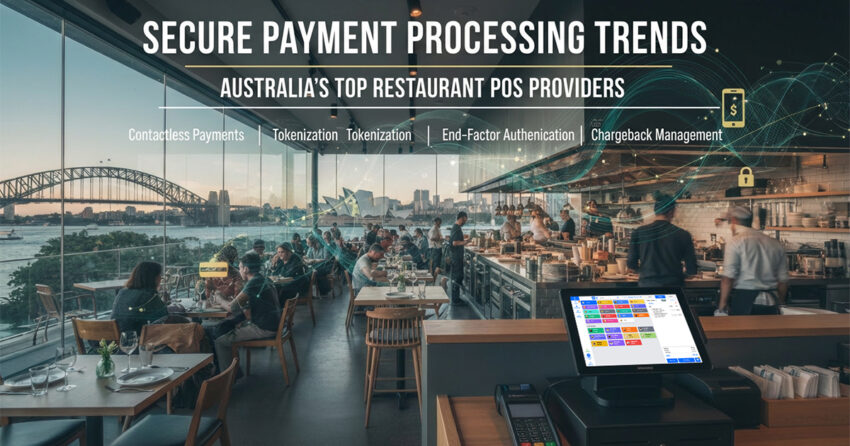
In Australia’s hospitality industry, payment security has moved far beyond being a technical requirement. For restaurants, it is now directly tied to customer trust, brand reputation, and regulatory compliance.
As digital payments dominate dining experiences—from contactless cards to online ordering—restaurant POS platforms are evolving rapidly to meet rising security expectations. This article explores the key payment security trends shaping modern restaurant POS systems in Australia, and why they matter for operators today.
Why Payment Security Is a Growing Priority for Restaurants
Australian restaurants process thousands of transactions every month, often across multiple channels. With this volume comes increased exposure to:
- Data breaches
- Card fraud
- Chargebacks
- Compliance penalties
Customers now expect secure, seamless payments as a baseline. Any lapse in security doesn’t just risk financial loss—it erodes confidence.
This shift has pushed restaurant POS payment security from a backend concern to a frontline business priority.
PCI DSS Compliance Is No Longer Optional
One of the most important trends is the growing emphasis on PCI DSS compliance for restaurant POS systems.
Modern POS platforms are designed to:
- Minimise the handling of sensitive card data
- Store little to no payment information locally
- Reduce the compliance burden on restaurant owners
For hospitality businesses, using a POS system that actively supports PCI DSS standards significantly lowers risk and simplifies audits.
Tokenisation Replacing Traditional Card Storage
Tokenisation has become a cornerstone of secure POS payment systems for restaurants.
Instead of storing actual card details, POS platforms convert payment information into encrypted tokens that are meaningless if intercepted. This approach:
- Reduces exposure to data breaches
- Protects customers even if systems are compromised
- Enables safer repeat transactions
Tokenisation is now considered a best practice rather than an advanced add-on.
End-to-End Encryption at the Point of Sale
Another major trend is the widespread adoption of end-to-end encryption (E2EE).
From the moment a card is tapped, inserted, or entered, data is encrypted and remains protected until it reaches the payment processor. This prevents sensitive information from being accessed anywhere along the transaction path.
For restaurants handling high transaction volumes, E2EE significantly strengthens overall hospitality payment security in Australia.
Secure Contactless and Mobile Payments
Contactless payments are now the norm in Australian dining venues. As usage grows, so does the focus on contactless payment security in restaurant POS systems.
Modern POS platforms ensure:
- EMV-compliant transactions
- Secure NFC communication
- Protection against replay and skimming attacks
This allows restaurants to deliver fast service without compromising security.
Fraud Prevention Built into POS Workflows
Rather than relying on external tools, many POS platforms now embed fraud prevention directly into transaction workflows.
These features may include:
- Transaction monitoring
- Unusual activity detection
- Secure refund and void controls
By integrating fraud prevention into everyday operations, restaurants reduce vulnerabilities without slowing service.
Secure Online and Omnichannel Payments
With the rise of online ordering and delivery, POS systems must now secure payments beyond the physical counter.
Advanced restaurant payment processing software ensures:
- Secure online transactions
- Consistent protection across dine-in, takeaway, and delivery
- Centralised payment security management
This omnichannel approach prevents security gaps between sales channels.
POS Providers Adapting to Security Expectations
POS providers operating in Australia, including platforms such as Pratham POS, are increasingly embedding advanced payment security measures directly into their systems to align with evolving compliance standards and customer expectations.
This industry-wide shift reflects a broader understanding that payment security is foundational to long-term hospitality success.
Security as a Competitive Advantage
For modern restaurants, secure payment processing is no longer invisible. Customers notice:
- Whether payments feel safe
- How smoothly transactions are handled
- How confidently staff manage issues
POS systems that prioritise security help restaurants build trust, reduce disputes, and protect their reputation in a highly competitive market.
Conclusion: Secure Payments Are Now Part of the Dining Experience
Secure payment processing has become an essential component of restaurant operations in Australia. As digital transactions continue to grow, POS platforms are evolving to deliver stronger encryption, better compliance, and smarter fraud prevention.
For restaurant owners, choosing a POS system that aligns with modern payment security trends isn’t just about avoiding risk—it’s about delivering a trustworthy, seamless experience customers expect every time they pay.